
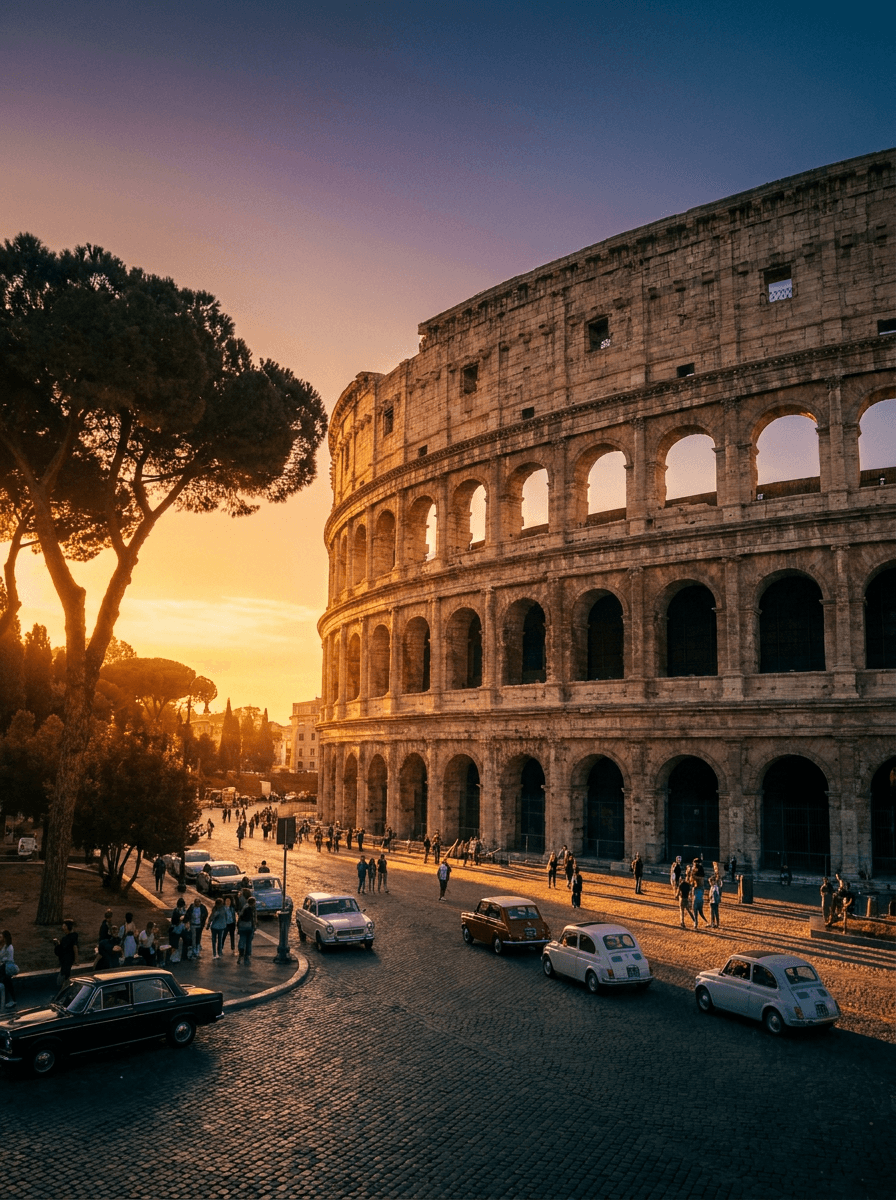
🏛️ Rome
A living city built directly on top of an empire's capital
Rome's defining trait is vertical time: you can descend from a Renaissance church into a Roman-era foundation in the same building. The city was the capital of an empire that controlled most of the known world for centuries, and it never fully cleared away that layer to build something new — it just built on top, which is why ancient columns show up embedded in medieval walls all over the historic center.
This is also a city that runs on a genuinely different daily rhythm than most Northern European capitals: long lunches, a quieter mid-afternoon, and evenings that start late and run later. Meals are taken seriously and regionally specific — Roman cuisine has its own defined dishes (carbonara, cacio e pepe, amatriciana) that are treated as fixed recipes, not casual interpretations.
Between the Colosseum, the Vatican, and the Roman Forum, Rome has three of the most-visited historical sites on earth within a few kilometers of each other — which makes timing (early mornings, pre-booked tickets) the single biggest factor in how good a visit actually feels.
Best time to visit: April–May and late September–October — before or after the peak-summer heat and crowds, with most outdoor sites still comfortable to walk for hours.
A ready 3-day route for Rome
Customize this route →Change the day count or interests, or save this route, by customizing it in Planner.
History
Art · History
Art · History
History
History
History
History
History
Nature